
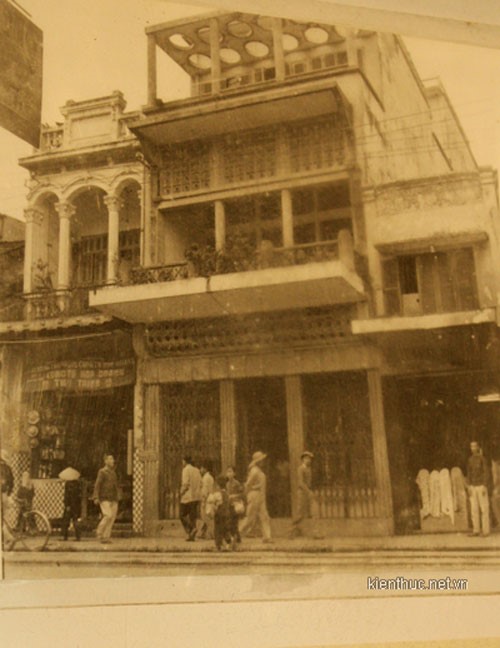
The house at 48 Hang Ngang was formerly located in Dien Hung ward, Huu Tuc commune, later renamed Dong Tho commune, Tho Xuong district. Today, it is situated in Hang Dao ward, Hoan Kiem district, Hanoi.

The original owner of the house was Mr. Trinh Phuc Loi. Later, his son, Trinh Van Bo, inherited the property and rebuilt it in the early 20th century in a modern architectural style with four floors. In the past, the first floor functioned as a silk shop facing Hang Ngang Street. Behind it were a storage yard and a garage, with an exit leading to Hang Can Street. The second floor was used as a living room and dining area, while the third and fourth floors served as residential spaces.
According to documents from the Ho Chi Minh Museum, before the August Revolution in 1945, comrade Khuat Duy Tien contacted and enlightened the homeowner, Mr. Trinh Van Bo, about the revolutionary cause. Shortly afterward, the entire family joined the Viet Minh Front, turning the house into a trusted revolutionary base in central Hanoi. Notably, the house was a multi-story building on Hang Ngang Street with strong iron doors, making it highly suitable for security and protection.
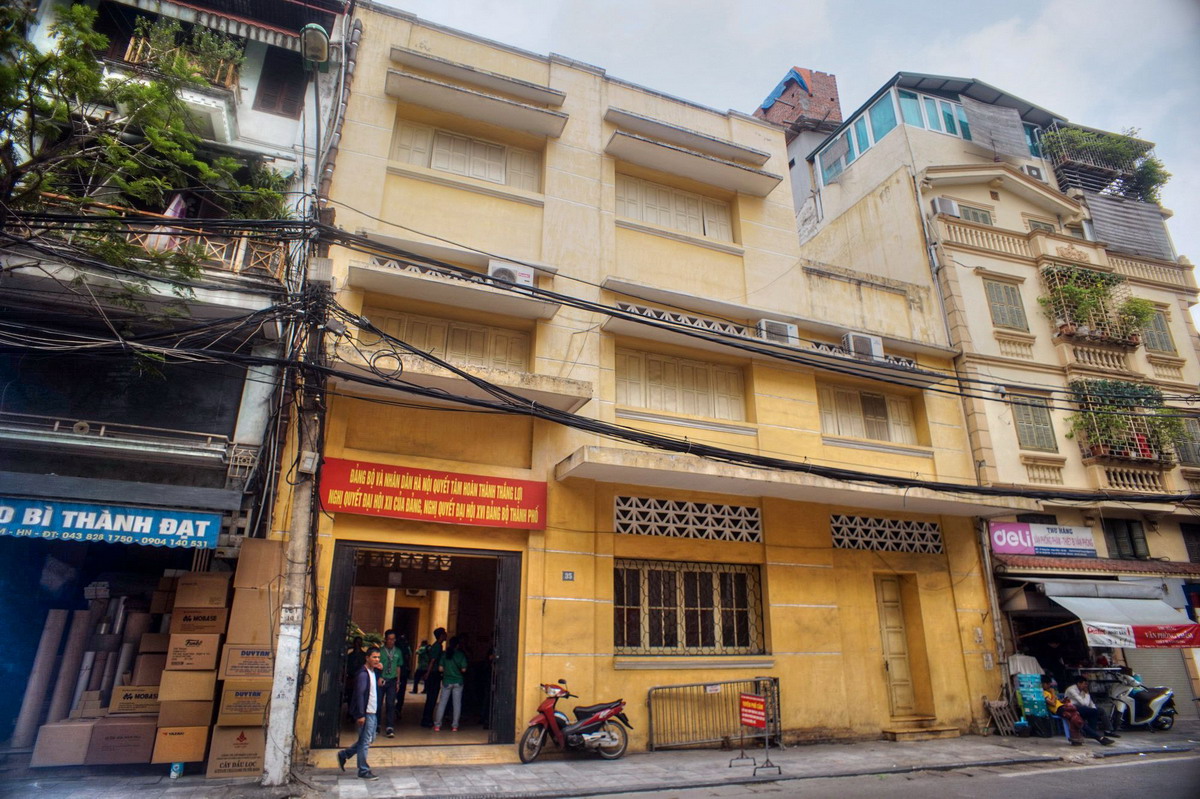
The house has two entrances: the main entrance at 48 Hang Ngang Street and a rear entrance at 35 Hang Can Street. As a multi-story building, it offered a wide view of the surrounding area. From the second and third floors, one could step across to neighboring rooftops without using the stairs or going down to the street, making it easy to move quickly in case of emergencies. The busy shopfront with frequent customer traffic also served as an effective cover. Therefore, 48 Hang Ngang House was an ideal place for President Ho Chi Minh and the Party’s central leaders to live and work.
Initially, Mr. and Mrs. Trinh Van Bo invited President Ho Chi Minh to stay on the third floor for privacy and quiet working conditions. However, he did not want to stay alone and only remained there for two nights. Later, Party leaders arranged for him to live and work in a small room connected to the living room on the second floor. The room was modestly furnished with a round table, a high-backed armchair covered in white fabric, and a long bench. It was in this very room, making use of every precious moment, that he wrote the Declaration of Independence.
During his stay, the household staff did not know who the elderly man with bright eyes, wearing faded brown clothes and sitting quietly in thought, really was. They were unaware that they were witnessing one of the most significant moments in Vietnamese history.
The following day, he convened and chaired a meeting of the Party Central Standing Committee. During this meeting, he and the committee agreed on key domestic and foreign policies in the new context, including the early announcement of the Provisional Government members, preparation for the Declaration of Independence, and the organization of a large public rally in Hanoi. On August 28, 1945, the list of the Provisional Government was officially published in Hanoi newspapers.
Also on the second floor of this house, President Ho Chi Minh chaired another important meeting of the Party Central Standing Committee, making several crucial decisions. These included transforming the National Liberation Committee into the Provisional Government, expanding its membership, promoting national unity by inviting patriotic intellectuals to join, and organizing a grand rally to Vietnam’s independence to the nation and the world. The Provisional Government list was published, and September 2, 1945, was chosen as the official date to present it to the public.
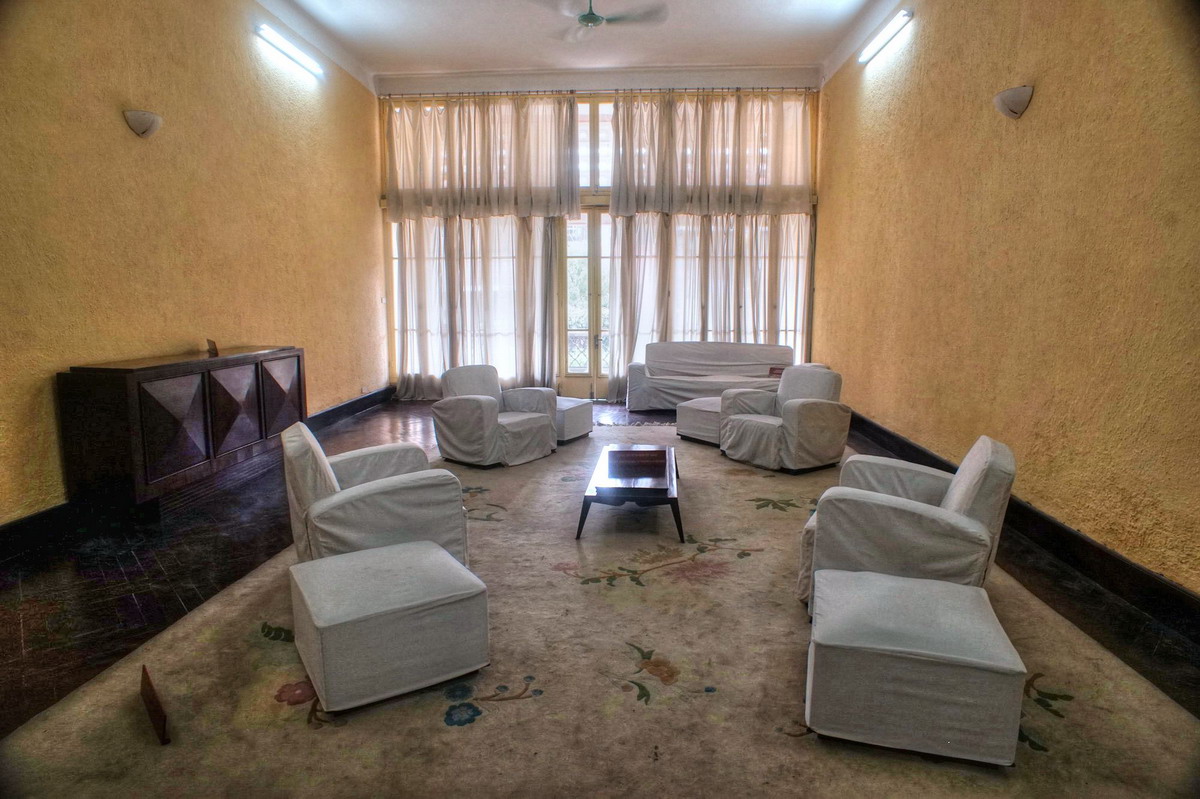
At the same time, it was in this very house at 48 Hang Ngang that he wrote the historic Declaration of Independence.
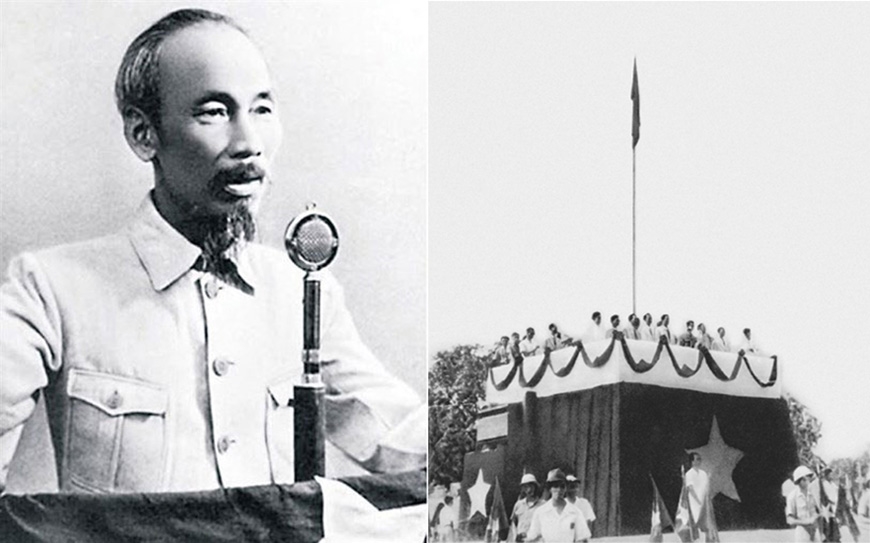
According to the Ho Chi Minh Museum, he once said: “This is the happiest moment of my life. I have written many things, but writing the Declaration of Independence brought me the greatest joy.” The Declaration was solemnly proclaimed before more than 500,000 people in Hanoi and the international community on September 2, 1945, at Ba Dinh Square.
After the Declaration of Independence ceremony on September 2, 1945, President Ho Chi Minh moved to Bac Bo Phu (No. 12 Ngo Quyen Street, Hanoi). In a small, simply furnished room on the second floor, he lived and worked from September 1945 until December 1946, before leaving Hanoi for Viet Bac to begin the long resistance war against the French colonialists.
Tours and Services
HANOI FRENCH QUARTER FREE WALKING TOUR
20$Original price was: 20$.0$Current price is: 0$.HANOI OLD QUARTER FREE WALKING TOUR
20$Original price was: 20$.0$Current price is: 0$.14-DAY ITINERARY EXPLORING VIETNAM PACKAGE TOUR
1,800$Original price was: 1,800$.1,000$Current price is: 1,000$.